You’re pricing out accessibility compliance for 20 client sites. One vendor quotes $40/month. Another wants $28,000/year. A consultant says $5,000 per site for a one-time audit. Three wildly different numbers, supposedly for the same problem.
They’re not the same problem. Accessibility compliance costs range from $29/month per site for overlay widgets to $250/page for manual audits, but these are fundamentally different products solving different parts of the puzzle. Overlays inject JavaScript to mask issues on the front end. Monitoring tools scan for real WCAG violations. Manual audits catch what automation misses. Your actual cost depends on which approach you need, and you probably need more than one.
TL;DR: Overlay widgets ($29-49/mo) are cheap but face growing legal backlash, with 25% of 2024 lawsuits targeting overlay-equipped sites. Enterprise monitoring platforms ($2,000-50,000/yr) price out most agencies. Manual audits ($100-250/page) are thorough but one-time snapshots. The practical path: affordable automated monitoring for daily regression detection, supplemented by periodic manual audits.
What Are the Three Main Approaches to Accessibility Compliance?
The accessibility tool market breaks into three distinct categories, and confusing them is an expensive mistake. Overlay widgets are JavaScript plugins that modify your site’s front end at runtime, attempting to patch accessibility issues without changing the underlying code. Monitoring tools crawl your pages, test against WCAG success criteria, and report violations without touching the DOM. Manual audits involve human testers, often using assistive technology like screen readers, evaluating your site against all WCAG criteria including the 43% that automation cannot check (Deque Automated Coverage Report).
According to the WebAIM Million 2025 report, 94.8% of the top million websites fail basic WCAG conformance. That means nearly every site you manage has issues. The question is how you find them and how much you pay.
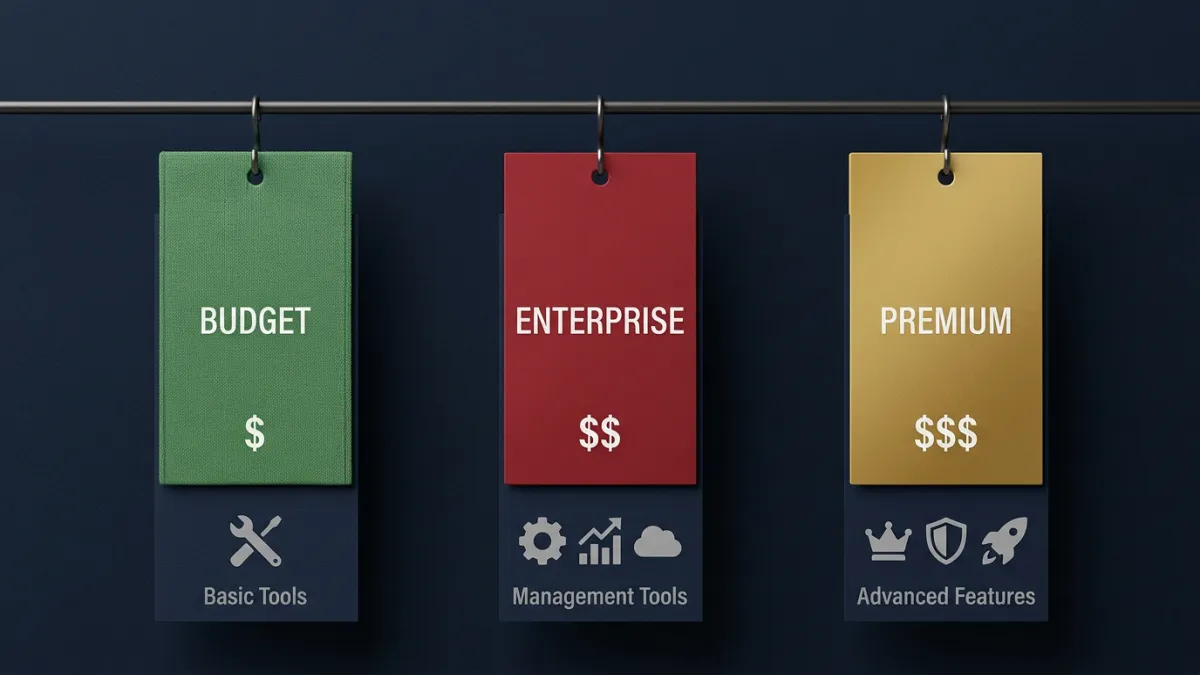
| Approach | Price Range | What It Does | Coverage | Legal Standing |
|---|---|---|---|---|
| Overlay widgets | $29-49/mo per site | Injects JS to mask front-end issues | ~30% of WCAG criteria | Courts do not accept as compliance |
| Monitoring tools | $2,000-50,000/yr | Scans and reports real violations | ~57% of issues by volume | Demonstrates good faith effort |
| Manual audits | $100-250/page | Human testers evaluate all criteria | 95%+ of issues | Strongest legal position |
| Combined (monitoring + manual) | Varies | Automated daily scans + periodic expert review | 80%+ of issues | Strong compliance posture |
How Do Overlay Widgets Compare on Price and Effectiveness?
Overlays are the cheapest option on paper. accessiBe charges $490/year (~$41/month) for sites with up to 5,000 monthly visitors, scaling to $3,990/year for 100,000 visitors. AudioEye offers a free Starter tier and a Pro plan at $12.99/month. UserWay matches accessiBe at $490/year. Equally AI starts at $38/month for 100,000 page views, dropping to $29/month on a two-year commitment.
But cheap does not mean effective. The FTC fined accessiBe $1 million in January 2025 for false advertising and fake reviews (FTC enforcement action). More concerning: 25% of all ADA website lawsuits in 2024 targeted sites that had overlay widgets installed (EcomBack 2024 Annual Report). Courts have consistently rejected the argument that an overlay widget constitutes ADA compliance. You are paying $40/month for something that provides neither real accessibility nor legal protection.
What Do Enterprise Monitoring Platforms Actually Charge?
Real monitoring tools, the ones that crawl your site, test against WCAG success criteria, and track violations over time, cost significantly more. Siteimprove averages $28,000/year per contract according to Vendr transaction data, with a range of $15,000-$50,000+ depending on page count and feature modules. Silktide starts at an estimated $5,000/year based on review sites. Monsido begins at $2,000/year. Even Pope Tech, built on WebAIM’s WAVE engine, prices on a per-page annual basis that adds up quickly for agencies managing dozens of sites.
These tools are expensive because they run actual scanning infrastructure: crawlers, historical violation databases, regression detection, scheduled audits. Siteimprove bundles SEO, content quality, and analytics alongside accessibility. You’re paying for a platform, not a widget. For a single large enterprise site, these prices make sense. For an agency managing 20 client sites at $15,000+ each, the math breaks down fast.
Why Is There Such a Huge Price Gap Between Overlays and Monitoring Tools?
The price gap exists because overlays and monitoring tools are fundamentally different products. An overlay widget is a single JavaScript file injected into your site. Development cost: relatively low. Infrastructure cost: a CDN. The widget runs in your visitor’s browser, so the vendor bears almost no compute cost per site. That is why they can charge $40/month. A monitoring tool, by contrast, operates server-side crawlers that request every page on your site, parse the DOM, run hundreds of WCAG rule checks per element, store results historically, and compare scans to detect regressions.
The infrastructure difference explains the 50-100x price gap. According to EcomBack’s 2024 data, ADA website lawsuits surged 37% year over year in the first half of 2025, which means demand for genuine monitoring is growing. But most agencies are stuck choosing between $40/month solutions that do not work and $15,000/year solutions they cannot afford.
How Much Does a Manual Accessibility Audit Cost?
Manual audits are the gold standard for accessibility compliance but also the most expensive approach. According to Accessible.org, professional manual audits cost $100-$250 per page. For a typical 50-page agency client site, that is $5,000-$12,500 per audit. Complex e-commerce sites with hundreds of unique templates can run significantly higher. A single audit covers about 95% of WCAG success criteria, including the nuanced interaction patterns and screen reader compatibility checks that no automated tool can evaluate.
The catch: a manual audit is a snapshot. The moment a developer pushes a code change, the audit’s findings may be outdated. Agencies that rely solely on quarterly manual audits have 90-day blind spots where regressions go undetected. That is why pairing manual audits with continuous automated monitoring makes sense. Tools like PageAudit run daily axe-core scans across all your client sites for $29-49/month per site, catching the high-frequency violations (missing alt text, color contrast failures, broken ARIA attributes) between manual reviews. The average homepage alone has 51 accessibility errors (WebAIM Million 2025), and those numbers change with every deploy.
What Is the Real Cost of NOT Having Accessibility Monitoring?
Skip the tools entirely and the cost conversation shifts from monthly subscriptions to legal settlements. ADA website lawsuit settlements range from $30,000 to $150,000 all-in, including attorney fees, remediation costs, and ongoing monitoring agreements (Accessible.org). With over 4,000 ADA website lawsuits filed annually in US courts (EcomBack 2024 Annual Report), the odds are not theoretical. The 77% of those lawsuits that target e-commerce sites (EcomBack 2024) means if your agency builds online stores, your clients are in the crosshairs.
For agencies, the liability exposure goes beyond the client’s settlement. Contract indemnification clauses can shift remediation costs to the agency that built or maintains the site. As Kris Rivenburgh of Accessible.org has noted, agencies without clear accessibility scope definitions in their contracts face real financial exposure when a client receives a demand letter. One lawsuit can erase years of revenue from a client relationship. Compared to the $348-$588/year cost of per-site automated monitoring, the math is straightforward.
How Should Agencies Budget for Accessibility Compliance?
The practical approach combines two layers: continuous automated monitoring for daily regression detection, plus annual or biannual manual audits for the issues automation cannot catch. Automated tools catch roughly 57% of real-world accessibility issues by volume (Deque Automated Coverage Report), but they cover the most common violations, including missing alt text, insufficient color contrast, empty form labels, and broken ARIA roles. These are also the violations most likely to be introduced by routine code changes.
A realistic annual budget for an agency managing 20 client sites looks something like this: automated monitoring at $29-49/site/month ($6,960-$11,760/year for 20 sites) plus one manual audit per year on the highest-risk client sites ($5,000-$12,500 per site). PageAudit sits in that affordable monitoring tier, offering daily axe-core scans, regression alerts, and developer-ready reports at the price of an overlay widget. The total cost is a fraction of a single lawsuit settlement, and it converts accessibility from a quarterly fire drill into a managed, ongoing service you can bill clients for.
Frequently Asked Questions
Are Overlay Widgets Like accessiBe a Valid Defense in an ADA Lawsuit?
Courts have not accepted overlay widgets as evidence of ADA compliance. The fundamental problem is that overlays attempt to modify the user experience at runtime without fixing the underlying HTML, CSS, or ARIA markup. When a plaintiff’s attorney tests a site using assistive technology, the overlay’s JavaScript patches frequently fail to address the actual barriers. The EcomBack 2024 Annual Report found that 25% of all ADA web lawsuits targeted sites with overlay widgets already installed, which undermines any “good faith effort” argument. The FTC’s $1 million fine against accessiBe in January 2025 for false advertising further weakened the credibility of overlay-based compliance claims. If your agency recommends an overlay to a client who later gets sued, you may face liability questions about the quality of that recommendation.
How Much Does a Manual Accessibility Audit Cost for a Typical Agency Client Site?
Manual accessibility audits run $100-$250 per page according to Accessible.org’s published pricing data. For a 20-page brochure site, expect $2,000-$5,000. A 50-page e-commerce site with unique templates runs $5,000-$12,500. Complex web applications with dynamic interfaces can exceed $15,000. These costs cover expert testers evaluating every WCAG 2.1 AA success criterion, including keyboard navigation, screen reader compatibility, and cognitive accessibility patterns that automated tools cannot check. Most audit firms deliver a detailed report with prioritized violations, code-level fix recommendations, and a remediation roadmap. The audit is valid until the next code change, which is why combining manual audits with automated monitoring provides the best ongoing coverage.
What Is the Difference Between an Overlay Widget and a Monitoring Tool?
An overlay widget is a JavaScript file embedded in your website that attempts to modify the front end at runtime to address accessibility issues. It changes what visitors see and interact with, but it does not fix the underlying source code. A monitoring tool is a separate service that crawls your pages, tests them against WCAG success criteria using engines like axe-core, and reports violations back to you. It never touches your live site. The distinction matters because overlays mask problems while monitoring tools reveal them. Overlays operate at $29-49/month per site. Monitoring tools historically cost $2,000-$50,000+/year, though newer options have brought per-site monitoring down to the $29-49/month range. Automated monitoring tools catch roughly 57% of accessibility issues by volume (Deque), while overlays address approximately 30% of WCAG criteria at best.
Can Automated Scanning Replace a Manual Accessibility Audit?
No. Automated scanning tools, including axe-core, cover approximately 32% of WCAG 2.1 A and AA success criteria according to Deque’s research. They catch about 57% of real-world issues by volume because the automatable violations (missing alt text, color contrast failures, empty form labels) happen to be the most common ones. But critical accessibility requirements like keyboard trap detection, logical reading order, meaningful link text in context, and screen reader announcement accuracy require human judgment. The practical approach is layered: use automated monitoring to catch the frequent, high-volume violations on a daily basis, and supplement with manual audits annually or after major redesigns to cover the criteria automation cannot evaluate. Neither approach alone achieves full WCAG conformance.
How Often Should Agencies Scan Client Sites for WCAG Violations?
Daily automated scans are the minimum for catching regressions introduced by code deployments. The WebAIM Million 2025 study found an average of 51 accessibility errors per homepage, and these numbers shift with every template change, content update, or plugin upgrade. Agencies that scan quarterly leave 90-day windows where new violations accumulate undetected. That is how demand letters arrive: a developer pushes a redesign that wipes alt tags from 200 images, and nobody catches it for three months. Daily automated scans catch those regressions within 24 hours. Manual audits should happen at least annually, or after major site redesigns, to evaluate the WCAG criteria that automated tools cannot check. This two-layer cadence, daily automated plus annual manual, is the standard recommendation from accessibility practitioners.